Thyroid Profile Tests: Price, Procedure, Side Effects, and Results
Team MyMeds247 | Chronic Conditions | January 25, 2024
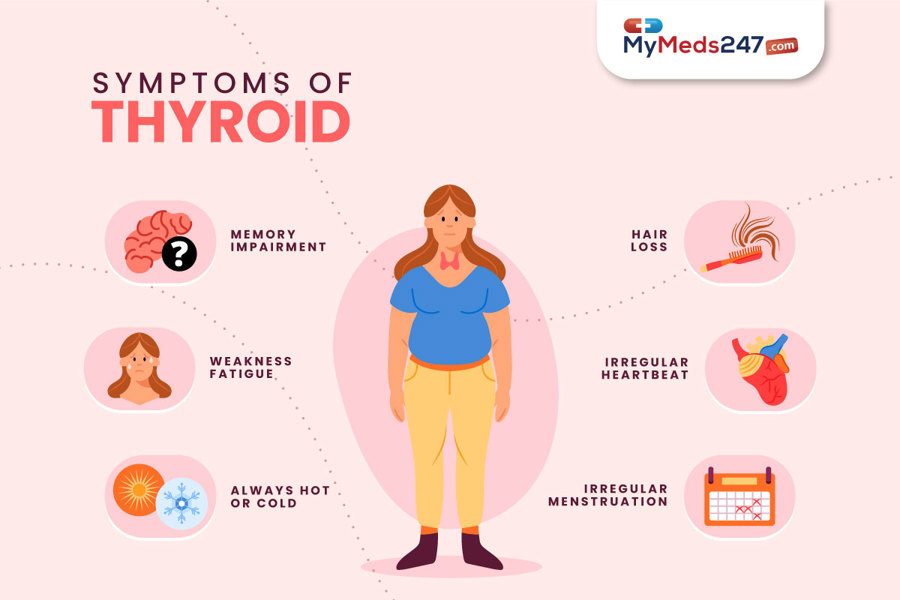
It is a series of tests that evaluates the function of Thyroid gland and helps in the diagnosis of thyroid diseases. Thyroid hormones such as T3, T4, and TSH are measured in the blood from this test. Thyroid profile tests are used to explain if your thyroid gland is functioning properly by measuring and evaluating the amount of thyroid hormones in your blood. These blood tests assist to diagnose thyroid diseases. The thyroid gland is situated in the anterior part of neck. Its duty is to produce thyroid hormones, which propagates through your blood and regulate body’s metabolism, including temperature, weight, and energy.
Table of Contents
Why do I need thyroid profile test?
This test evaluates the thyroid gland's function and helps in the diagnosis of thyroid diseases. This is a comprehensive analysis of Thyroid function.Thyroid profile test explains if you have:
Hyperthyroidism: When you have hyperthyroidism more thyroid hormones are produced than your body requirement. Hyperthyroidism boosts up your metabolism process, which can cause weight loss, rapid heartbeat, and insomnia, anxiety and many other symptoms. Hyperthyroidism is due to common cause of Graves’ disease.
Hypothyroidism: When you have hypothyroidism, there is a reduction in the production of thyroid hormone. Hypothyroidism decreases the metabolism, which may result in weight gain, irregularity in menstrual cycle, fatigue and other symptoms. The most common concern of hypothyroidism is Hashimoto’s disease. This test is used to diagnose and identify thyroid disorders which is associated with hyperthyroidism or hypothyroidism. These include:
Thyroiditis - Inflammation of the thyroid gland is called Thyroiditis. Thyroiditis symptoms can vary largely. Usually, an inflamed thyroid results you to experience the symptoms of hypothyroidism or hyperthyroidism depends on the type of thyroiditis you have.
Typical hypothyroidism symptoms consists of: Fatigue, Weight gain, Dry skin, Depression, Constipation, Poor exercise tolerance. Hyperthyroidism symptoms contains: Anxiety, Insomnia, Irritability, Palpitations, Fatigue, Weight loss and Diarrhea.
Graves’ disease: Graves’ disease is an auto-immune disease that make effect on the thyroid gland. The gland produces a lot of thyroid hormone and this condition is known as hyperthyroidism.
It generally occurs in people between the ages of 30 and 50, but it may affect children and older adults also. You are more likely to get Graves’ disease if you have another autoimmune disease for example Rheumatoid arthritis, Lupus, Type 1 diabetes, Celiac disease.
Hashimoto’s disease: Hashimoto’s disease can pave way to hypothyroidism when the thyroid gland is affected and slowly halts producing sufficient hormones to keep the body working in proper manner.
This is also known as Hashimoto’s thyroiditis, chronic lymphocytic thyroiditis or autoimmune thyroiditis.
Hashimoto’s disease is more prevalent in women than men. It is commonly appears between the ages of 30 and 50 and tends to run in families.
This is more likely to develop in people who have other autoimmune diseases for example certain liver conditions, B12 deficiency, gluten sensitivity, rheumatoid arthritis, type 1 diabetes.
Goiter: Goiter occurs when your thyroid gland increase in shape. Goiter is a disease where your thyroid gland grows larger in shape. Your entire thyroid can grow larger or it can develop one or more small lumps which is known as thyroid nodules.
To whom does Goiter affect more?
Anyone can have a goiter. Your risk of developing goiter also increases the chance as you grow. They are more common after 40. The main symptoms of goiter include:
- A lump in the front of your neck can be seen just below the Adam's apple in this disease.
- A feeling of tightness in your throat region.
- Hoarseness or scratchy voice.
What happens during this test?
Thyroid blood tests are used to explain if your thyroid gland is functioning well by measuring the amount of thyroid hormones in your blood. This blood tests help to diagnose diseases in thyroid if any. Tests can include thyroid stimulating hormone (TSH), T4, T3, and thyroid antibody test. Thyroid Profile testincludes:
- Thyroid Stimulating Hormone (TSH): It is produced in the pituitary gland and regulates the balance of thyroid hormones which includes T4 and T3 in the bloodstream. This is generally the first test your provider will do to assess for thyroid hormone imbalance. Mostly, thyroid hormone deficiency is concerned with an elevated TSH level whereas thyroid hormone excess (hyperthyroidism) is associated with a low level of TSH. If TSH is deranged measurement of thyroid hormones directly, including thyroxine (T4) and triiodothyronine (T3) might be done to further evaluate the problem.Normal TSH test range for an adult is: 0.40 - 4.50 mIU/mL.
- T4: Thyroxin Tests for hypothyroidism and hyperthyroidism and used to check and monitor treatment of thyroid abnormality. Low T4 is seen with hypothyroidism, whereas high T4 levels might show and indicate hyperthyroidism. T4 range which is considered as normal for an adult is: 5.0 – 11.0 ug/dL.
- T3: Triiodothyronine tests assist to diagnose hyperthyroidism or to show the seriousness of hyperthyroidism. Low T3 levels can be seen in hypothyroidism, but more often this test is beneficial in the diagnosis and management of hyperthyroidism, where T3 levels are increased.Normal range is considered as range between 100 - 200 ng/dL
Thyroid Profile Test Price in India
The thyroid blood test price depends on city to city. Thyroid test costs may be slightly higher in metro cities with respect to small town labs.
You can book thyroid test at Rs 582 from MyMeds247.com.
| Test Name | Thyroid Profile Test Price |
|---|---|
| Test Includes | 3 |
| Sample Type | Blood |
| Test Price | 700 |
| Discounted Price | 582 |
| Free Home Sample Collection | Yes |
| Fasting Time | Not Required |
| Report Time | Same Day |
| Report Type | E-Report |

Thyroid Profile Test - Interpreting
TSH: Normal test range for an adult: 0.45 - 4.50 mIU/mL
T4: Normal range for an adult is considered as range between 5.0 – 11.0 ug/dL
T3: Normal range: 100 - 200 ng/dL
Results of a thyroid profile test including three parameters that are above or below normal levels may indicate a problem or concern.
T3 - Interpreting
It may be abnormally high in pregnant women and people who have liver illnesses. Your healthcare provider or doctor will be able to rule out these illnesses if the T3 test also covers a measurement of free T3.
High T3 levels indicate
- Graves’ disease
- Hyperthyroidism
- Painless (silent) thyroiditis
- Thyrotoxic periodic paralysis
- Toxic nodular goiter
Low T3 levels indicate
- Hypothyroidism
- Starvation
- Long-term illness
- Recent history of the hospital admission
T4 - Interpreting
Increased T4 levels indicate
- Hyperthyroidism
- Thyroiditis
- High levels of protein in the blood
- Excess iodine
- Increased dose of thyroid replacement medication
- Trophoblastic disease
Low T4 levels indicate
- Dietary issues
- Prolonged fasting
- Malnutrition
- Hypothyroidism
- Pituitary disorders
TSH - Interpreting
High levels of TSH indicate:
- Hashimoto’s thyroiditis
- Iodine deficiency
- Surgical removal of the thyroid gland
- Tumors of the pituitary gland
- Inflammation of the thyroid gland
- Overmedication for hyperthyroidism
Low levels of TSH indicate
- Anti-thyroid medications
- Radioactive iodine
What happens next after the thyroid profile test?
You have a thyroid condition if your Thyroid results are deranged then please consult the doctor and your doctor can prescribe medication.
You have to take the right dosage of medicines as per prescription.
Within an interval of three months you should take a retest as per your condition.
Once the results are within normal limits, your doctor can recommend dietary changes such as vitamin and mineral supplements etc.
Some important points to remember
- The T3, T4, and TSH levels are measured in thyroid profile test.
- People above 40, people with a family history of autoimmune diseases, during pregnancy, and diabetics are at high risk of thyroid disorders and such people must opt this test.
- TSH levels that are too high can suggest that your thyroid is not producing ample thyroid hormones. Such condition is known as hypothyroidism.
- Decreased TSH levels may suggest that your thyroid is producing too many hormones and this condition is also known as hyperthyroidism.
- If you have a hyperactive thyroid you may feel anxiety, weight loss, hand tremors, increased heart rate, bulging of the eyes, and sleeplessness and accordingly can opt this test.
- If your thyroid is hypoactive or less active you might feel weight gain, tiredness, hair loss, cold sensitivity, constipation, and irregular menstrual periods.
- High levels of T3, T4, and low levels of TSH are indications and suggestions of hyperthyroidism.
- Low levels of T3, T4, and elevated levels of TSH are indications and suggestions of hypothyroidism.
- The thyroid profile test cost range varies in different testing labs and you can opt MyMeds247 for better price and result.
- It is important to follow a diet advised by your doctor if you are at high risk of thyroid disease and monitor regularly.
Are there any risks to the thyroid profile test?
There are generally no risk to do this test. A blood draw is a minimally invasive procedure and doesn’t have many side effects. Immediately after the blood draw, you may or may not notice slight bruising at the area where the needle was inserted and if painful can take suggestion from doctor.
With the help healthcare experts and our modern labs, you are able to get your reports within the same day of the test being conducted.
Thyroid Profile Test - FAQ’s
You can get your reports within same day of the test conducted.
You can opt this test when experiencing unexpected weight gain or loss, dry skin, constipation, a puffy face, a hoarse voice, anxiety and nervousness.
There are generally three types of thyroid tests, such as T3, T4, and TSH to examine how efficiently your thyroid gland is working.
When you are going for the test, it is not necessary to remain on an empty stomach, but if your doctor has asked for other blood tests along with the thyroid test, it is suggested that you fast for min 8-10 hrs.
Thyroid range of TSH levels is 0.45 to 4.5 mU/L and it is standard.
Our healthcare professional or phlebotomist will draw blood from your arm and send it to the lab to check your thyroid function.
You May Like Also
Latest Post

February 21, 2024
February 05, 2024


January 30, 2024