Difference between Family Floater vs Individual Health Insurance Plans
Team MyMeds247 | Other | January 30, 2024
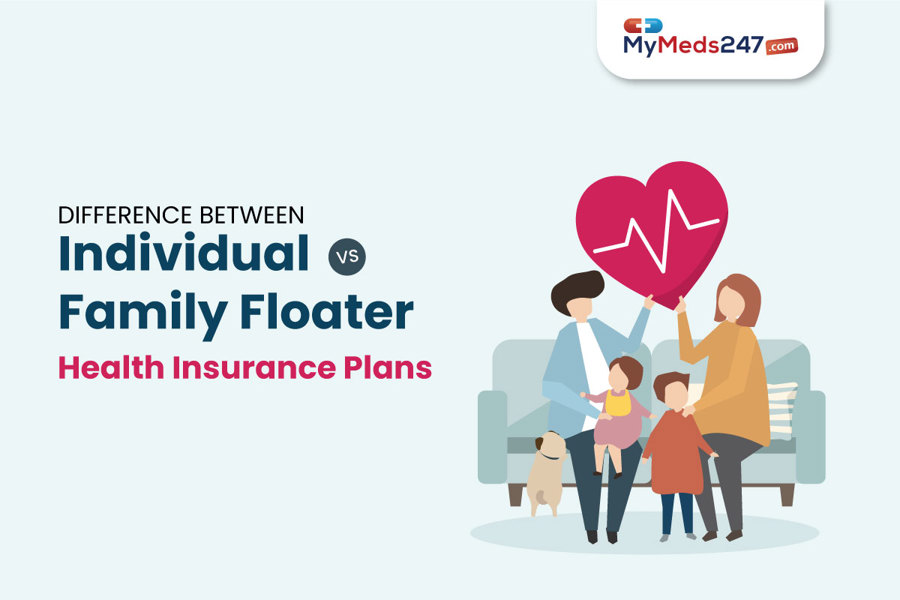
In the complex realm of healthcare, securing the right insurance coverage is crucial for the well-being of you and your loved ones. Health insurance plans play a pivotal role in providing financial protection against unforeseen medical expenses. The major difference in both health insurance is that in family floater health insurance, all family members are covered under a single plan, sharing both the premium and total sum insured. Conversely, individual health insurance is exclusive to one person, with the premium and sum insured dedicated solely to that individual. The distinction lies in collective coverage versus personalized protection. The saying "Health is Wealth" gains significance with age, emphasizing the growing importance of well-being. As time progresses, these three words become more profound, resonating with the increasing awareness of the role health plays in our lives, especially as the world advances around us. In this article, we'll delve into the distinctions between two common types of health insurance policies – Family Floater and Individual Health Insurance – to help you make an informed decision.
What is Health Insurance?
Health insurance is a financial tool designed to mitigate the impact of medical expenses. It acts as a safety net, offering coverage for hospitalization, surgeries, medications, and other healthcare-related costs. Having a robust health insurance policy online ensures that you and your family can access quality healthcare without the burden of exorbitant bills.
Family Floater Health Insurance
Family Floater health insurance is a comprehensive policy that covers the entire family under a single umbrella. This means that the sum insured is shared among all family members, offering flexibility and cost-effectiveness. These health insurance plans typically include the policyholder, spouse, and children. The coverage extends to a range of medical expenses, from hospitalization to outpatient treatments.
One of the key advantages of a Family Floater plan is the collective utilization of the sum insured. If one family member requires a significant medical intervention, the coverage can be utilized from the shared pool, ensuring that other members still have coverage for potential medical needs.
Individual Health Insurance
On the other hand, Individual Health Insurance is a policy tailored for a single person. Each family member must have a separate policy, and the sum insured is dedicated solely to that individual. This means that each member has their own coverage limit, independent of the others.
Individual health insurance plans offer a personalized approach, allowing policyholders to choose coverage based on their specific health needs. While these plans might seem more straightforward, they can be advantageous for individuals with specific health concerns or those who want more control over their coverage.
Differences Between Family Floater and Individual Health Insurance
The two insurance policies differ primarily in that one covers only one person and the other covers an entire family. However, there are other key distinctions to consider.
| Criteria | Family Floater Health Insurance | Individual Health Insurance |
|---|---|---|
| Definition | A family floater health insurance policy extends coverage to the entire family under a single plan. | An individual health insurance plan offers coverage for medical expenses on an individual basis. |
| Coverage | A family floater health insurance plan offer convenience by eliminating the need to buy multiple plans for each family member. With this option, you can cover all family members simultaneously under a single comprehensive plan. | An individual health insurance plan provides coverage for a single person. Should you seek insurance for additional family members, separate policies for each individual must be purchased. |
| Sum Insured | The sum insured in a family floater health insurance policy is designated for all beneficiaries covered by the plan and is distributed among them. This collective sum can be utilized up to the policy limit. | The sum insured in an individual health plan is exclusively allocated to the policyholder, and under no circumstance can it be shared with anyone else. |
| Suitable for | A family floater health insurance is suitable for young couples or small nuclear families. | Individual health insurance is strongly recommended for larger families or those with senior parents, as a family floater policy may not provide sufficient coverage. |
| No Claim Bonus | The No-claim Bonus in a family health insurance plan is less likely to remain intact due to covering multiple individuals, raising the chance of a claim in a policy year. | The No-claim Bonus in an individual health insurance plan is more likely to stay intact, as the coverage is for a single individual who may not file a claim if no health challenges arise during a policy year. |
Family Floater or Individual Health Insurance - Which one to choose?
The decision between opting for a Floater or Individual cover hinges on various factors such as the ages of you and your family members, lifestyle habits, and overall health. If your family spans different age groups, some members have pre-existing conditions, and you are comfortable managing multiple policies and premiums, individual health insurance may be the way to go. This choice is also suitable if you seek tax benefits under Section 80D for multiple family members.
Conversely, a family floater policy is ideal when age differences among family members are minimal, and none suffer from pre-existing or chronic conditions. If you wish to cover children under 18 and prefer the convenience of a single policy without managing multiple documents and premiums, a family floater plan is a practical option. Understanding the nuances of both types, including their advantages and disadvantages, will help you determine the optimal coverage for your needs.
Conclusion
In the realm of health insurance, there is no one-size-fits-all solution. The choice between Family Floater and Individual health insurance plans depends on various factors, including family size, health conditions, and budget considerations. Families should weigh the cost-effectiveness and shared benefits of a Family Floater plan against the personalized coverage and control offered by Individual Health Insurance.
As you navigate the intricate waters of health insurance plans, it's essential to explore options, compare policies, and make an informed decision based on your family's unique needs. Remember, securing a suitable health insurance policy online is an investment in the health and well-being of your loved ones, providing financial security during times of medical uncertainty.
You May Like Also
Latest Post

February 21, 2024
February 05, 2024

January 30, 2024
January 25, 2024